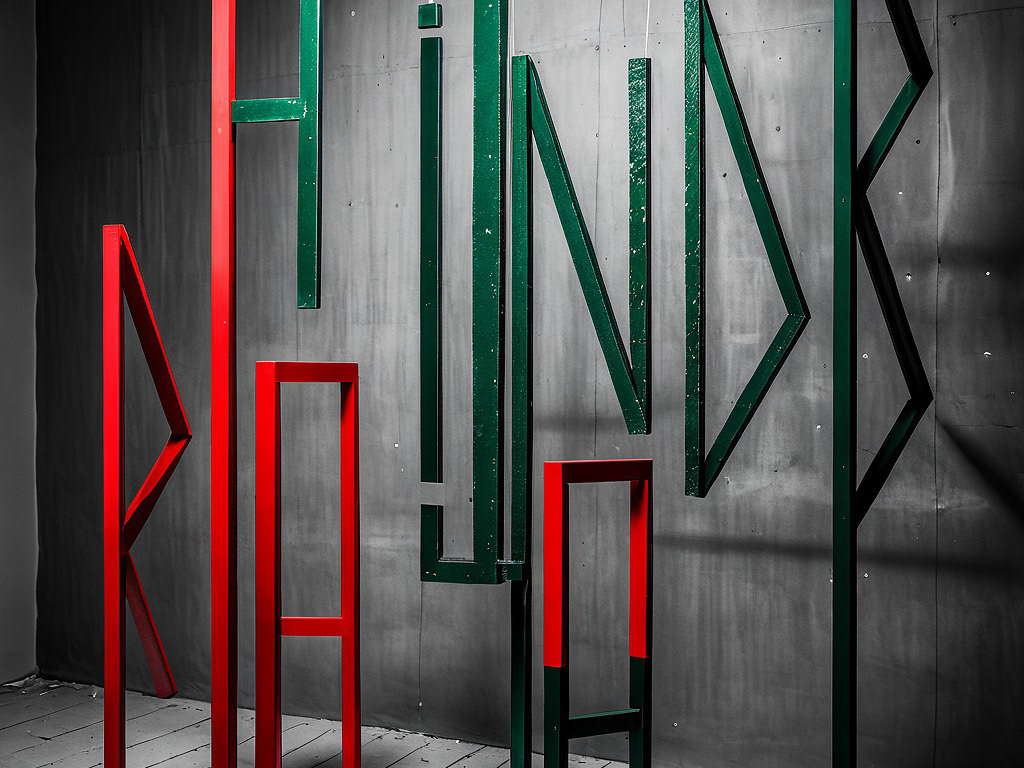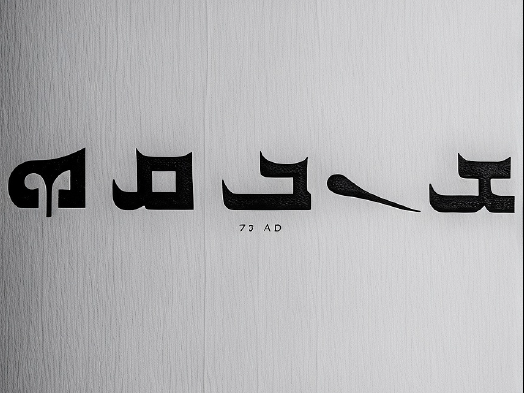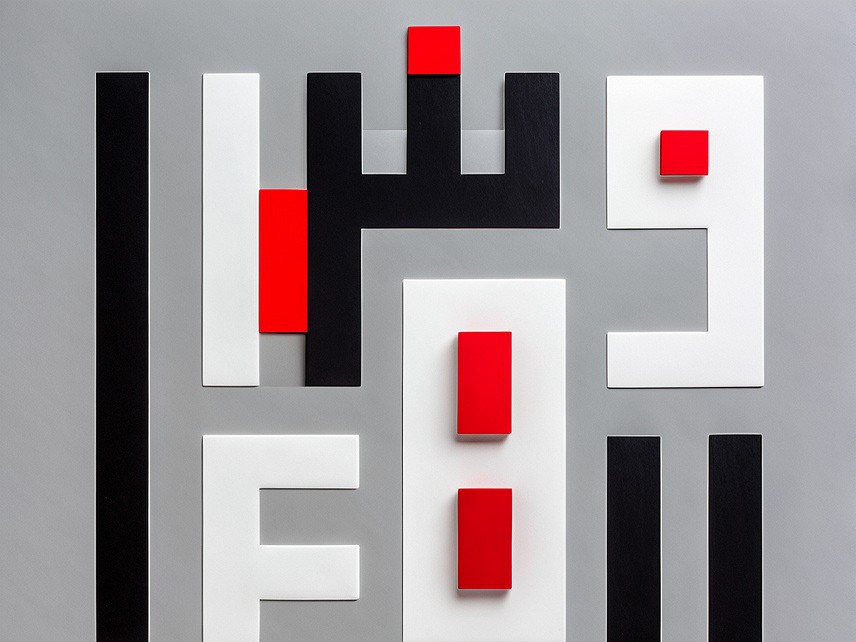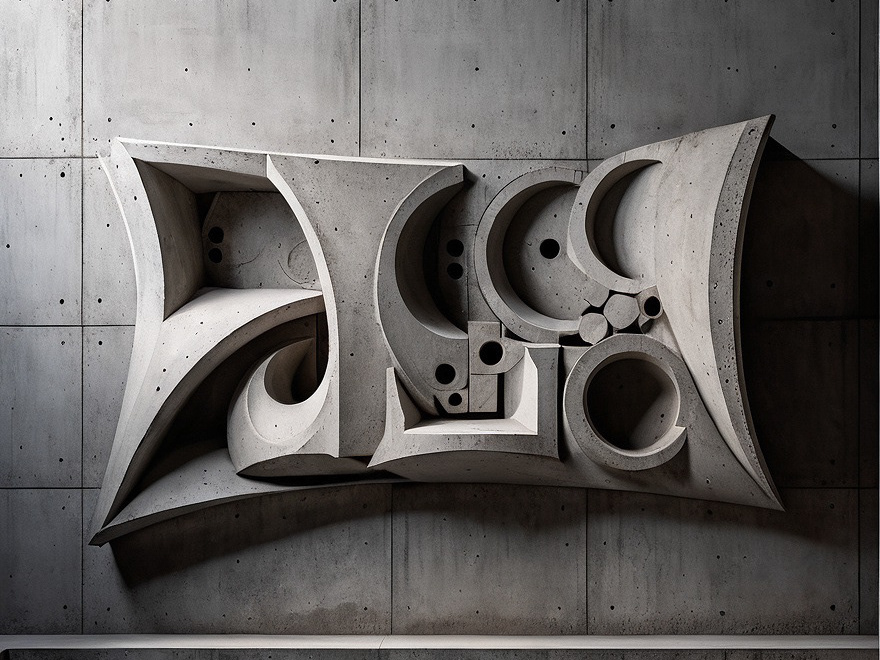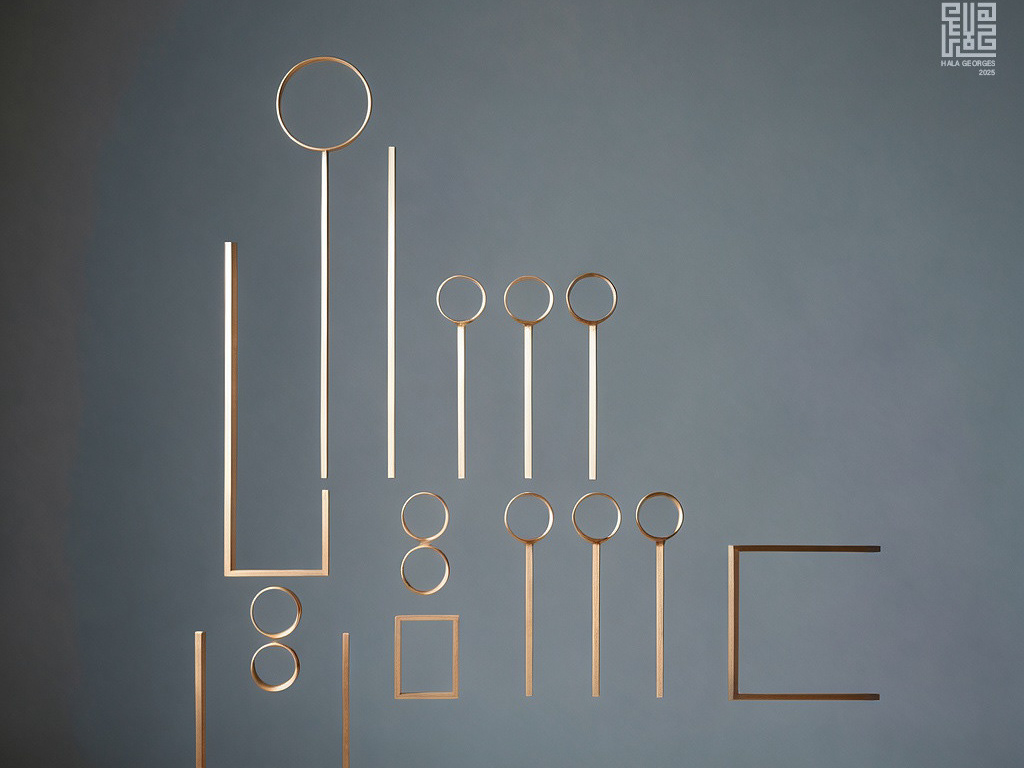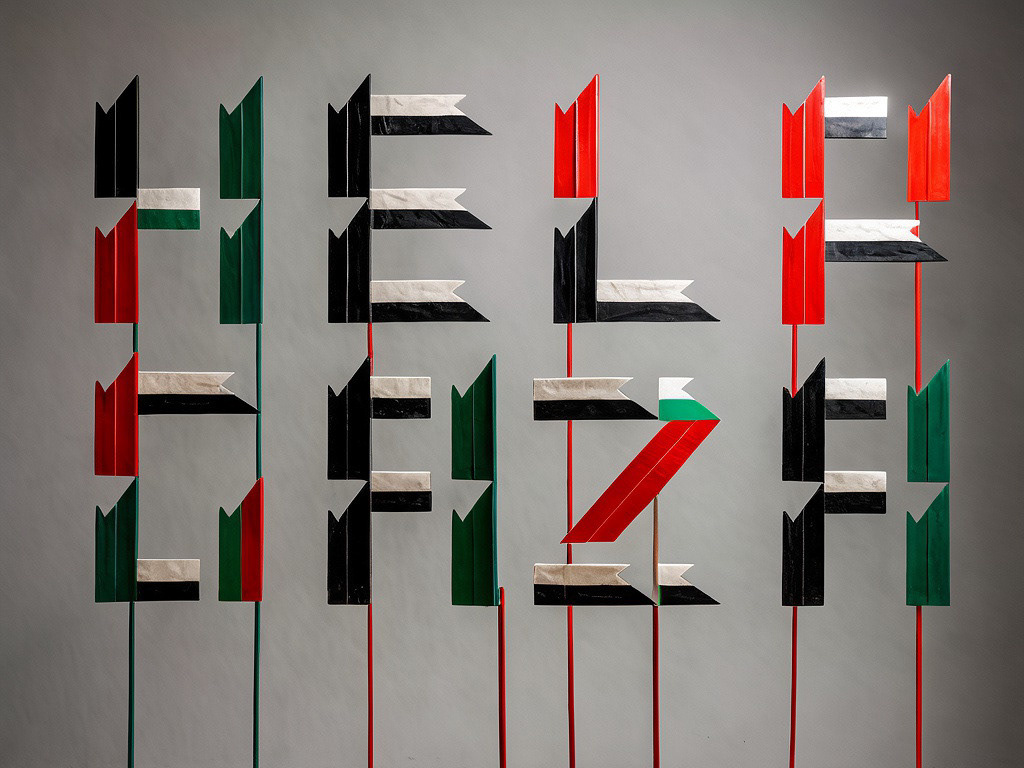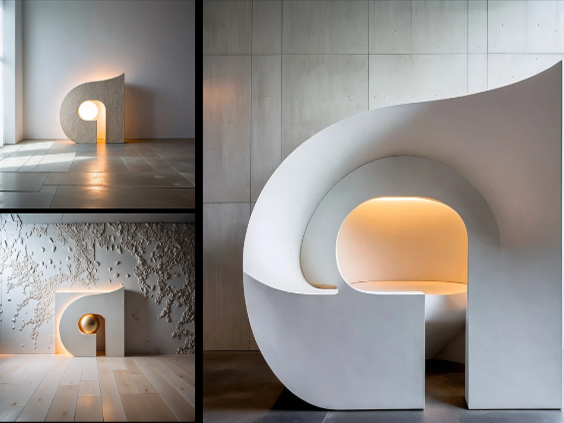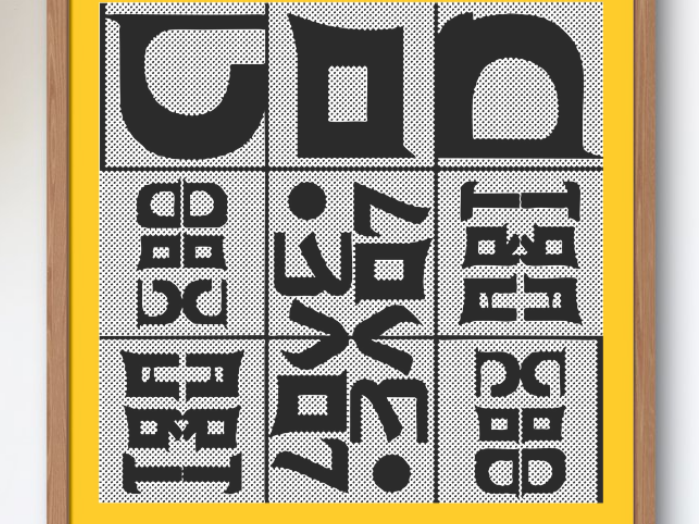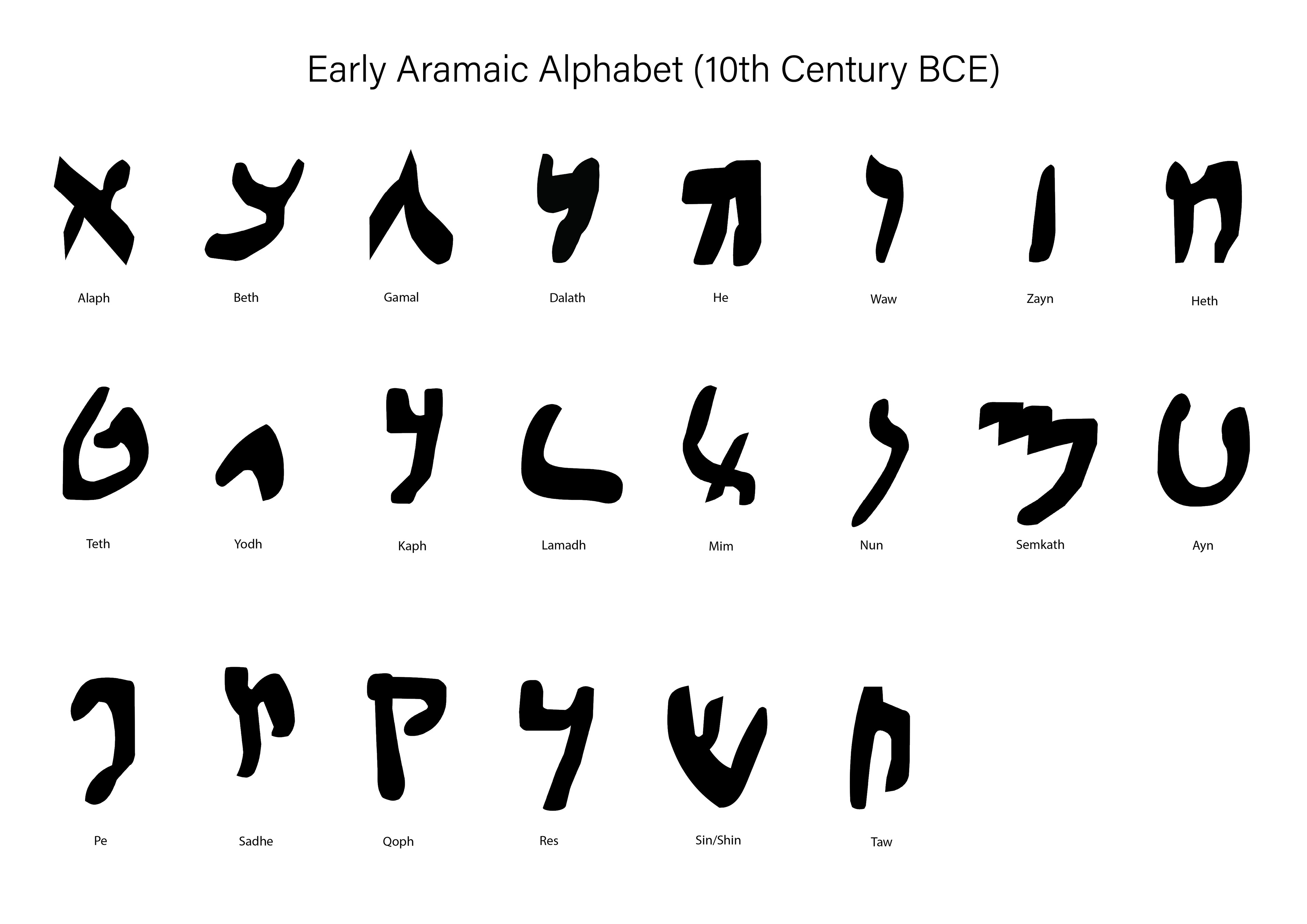
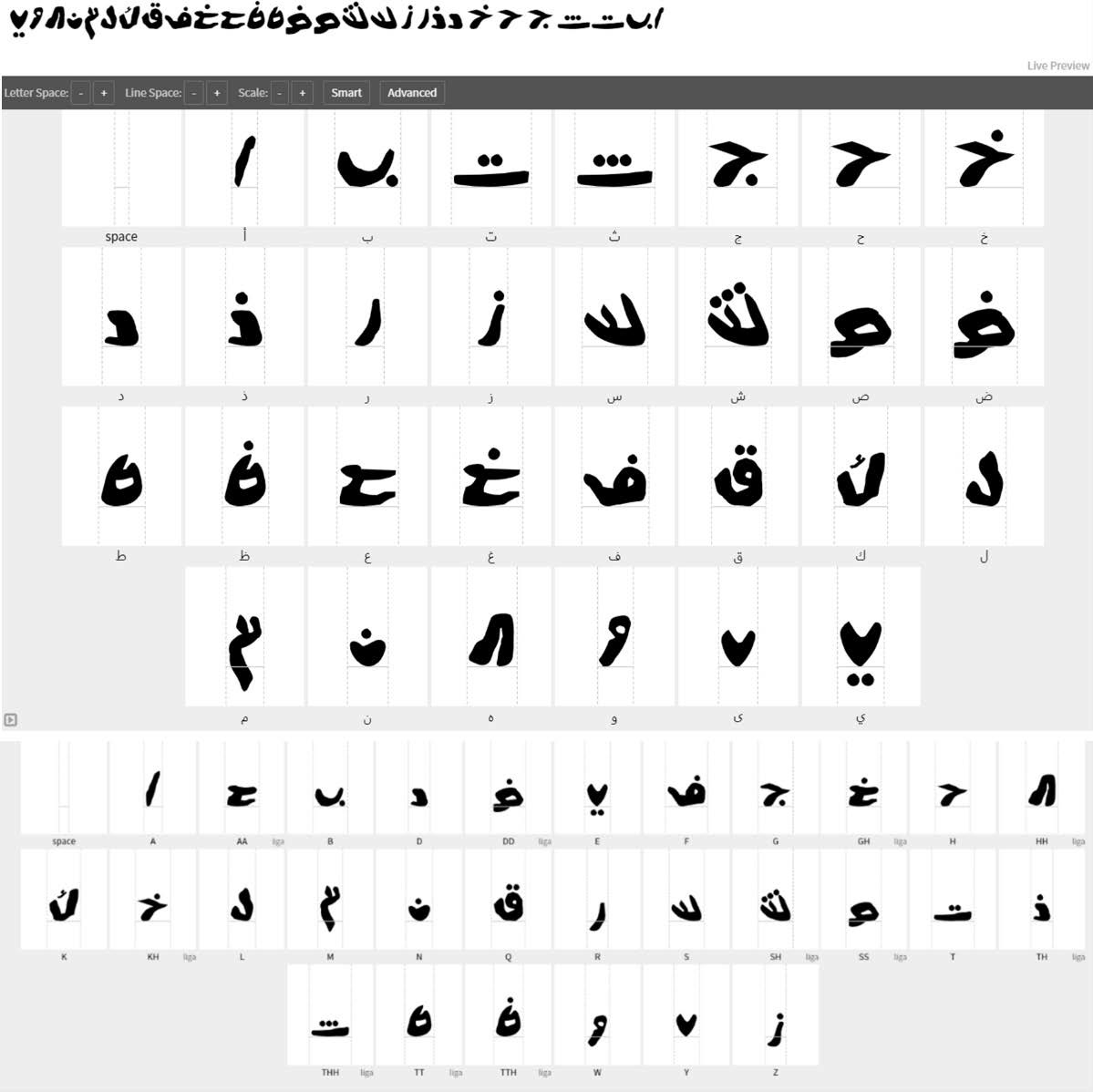
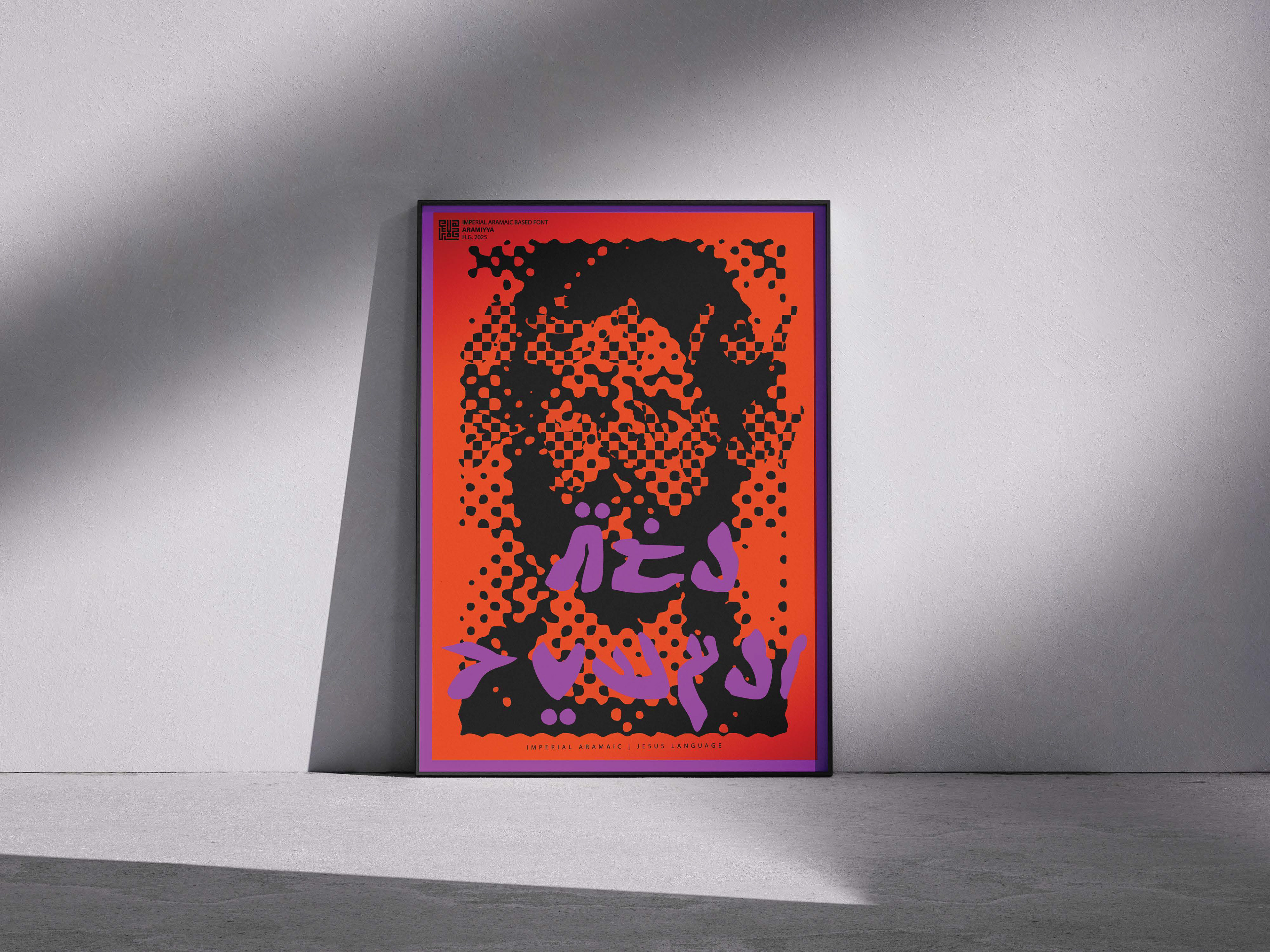
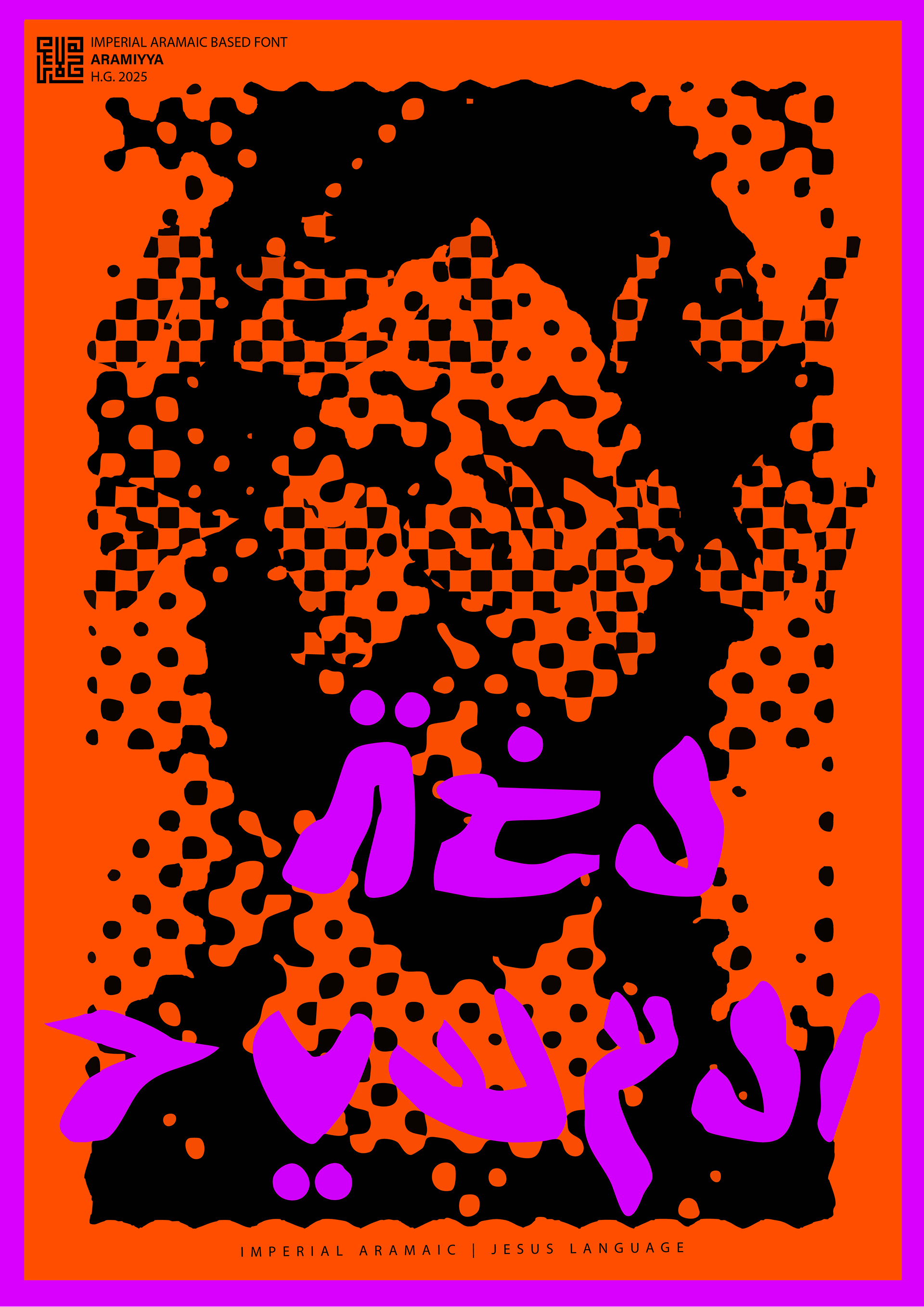
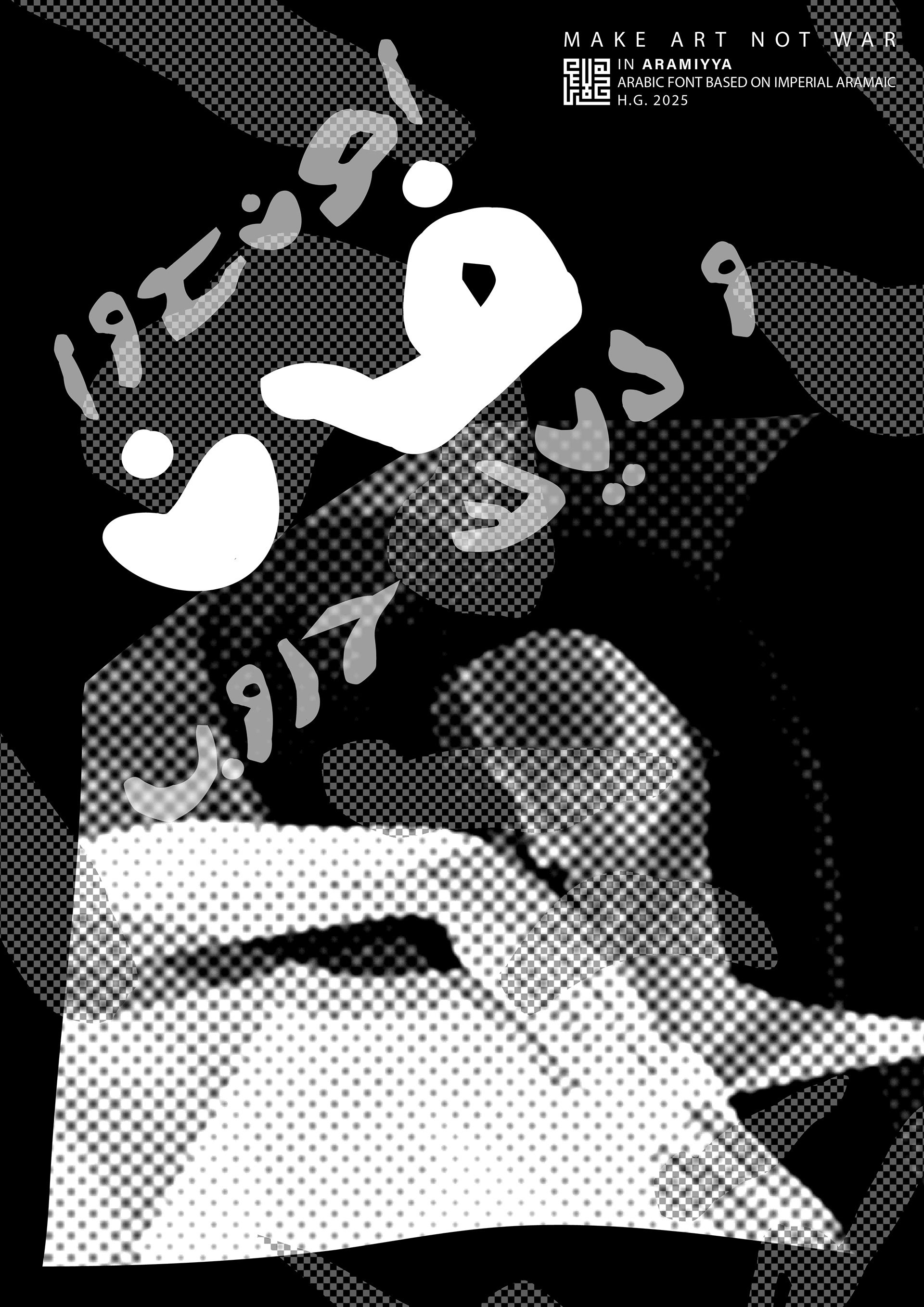
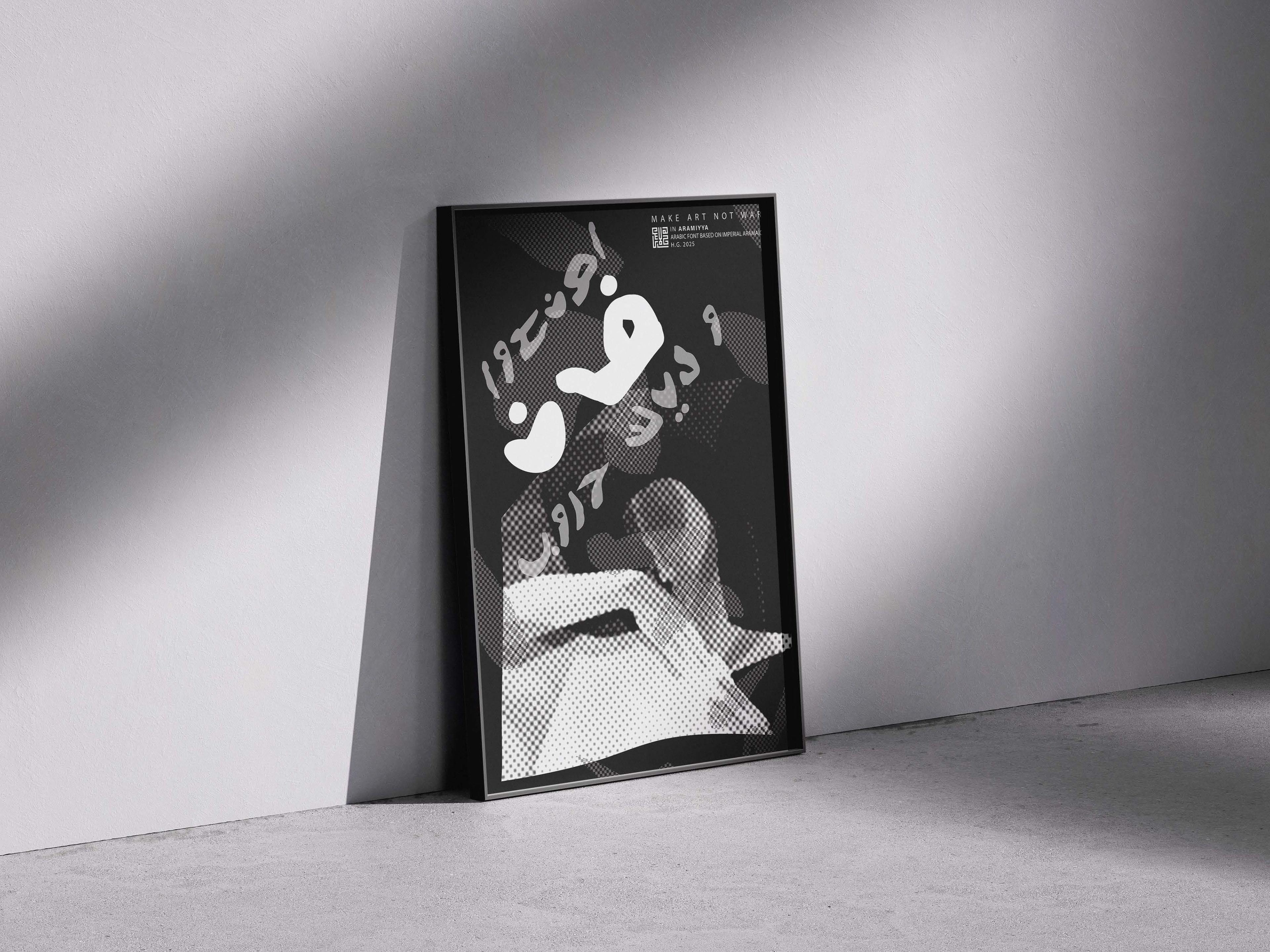
The ARAMIYYA alphabet is a practice-based typographic investigation that explores how structural principles derived from ancient Aramaic scripts can inform the design of a contemporary Arabic alphabet. The project does not aim to revive or reconstruct historical letterforms; instead, it examines how underlying structural logic can be translated into a new Arabic typographic system situated within contemporary visual communication. The research is grounded in close analysis of ancient Aramaic scripts, focusing on characteristics such as stroke economy, proportional restraint, modular construction, and angular articulation. These principles are abstracted and reinterpreted within Arabic letterforms, resulting in an alphabet that departs from conventional cursive connectivity. ARAMIYYA operates through discrete, non-connected characters, foregrounding form, structure, and silhouette rather than calligraphic flow. This approach positions the alphabet as a speculative system that challenges dominant expectations of Arabic typographic continuity while remaining legible and functional. The alphabet was developed through iterative drawing, refinement, and comparative testing across the full Arabic character set. To evaluate its performance in applied contexts, ARAMIYYA was translated into poster and book cover mock-ups. These applications allowed the assessment of scale, hierarchy, contrast, and legibility, ensuring the alphabet functions not only as an experimental typographic system but also as a viable tool for contemporary graphic design. ARAMIYYA functions both as a typographic artefact and as a critical inquiry into Arabic script, visual heritage, and contemporary design practice. The project positions Arabic typography as a flexible and evolving system, capable of sustaining alternative structural logics while engaging current modes of visual communication. This practice-based research meets the five core Frascati criteria: Novel: The project proposes an original Arabic alphabet derived from ancient Aramaic structural principles and reinterpreted through contemporary typographic design. Creative: New letterforms and visual systems are produced through experimental translation and iterative design practice. Uncertain in outcome: The open-ended nature of speculative alphabet design meant that formal and functional outcomes were not fully predictable at the outset. Systematic: The research followed a structured methodology combining script analysis, iterative letterform development, and applied design testing. Transferable or reproducible: The conceptual framework and design process can inform future Arabic type design, cross-script research, and pedagogical practice within visual communication.